Projects
Inbox Anonymous
Summary
Designed and developed a web-based anonymous communication platform intended to improve feedback, question-asking, and communication between organization members and leadership teams.
Context
While participating in student organizations, I observed that many members were hesitant to ask questions, provide criticism, or raise concerns openly. This often limited communication and reduced opportunities for feedback and organizational improvement.
My Role
Originated the concept, designed the system architecture, defined platform functionality, and directed development of the application.
Key Contributions
• Identified a recurring communication challenge across multiple organizations.
• Designed a two-way anonymous messaging system between users and administrators.
• Created a conversation structure that generated unique communication channels while preserving user anonymity.
• Designed administrative tools for managing conversations, moderating discussions, and controlling platform access.
• Developed the platform as a web-based application intended for adoption by student organizations and community groups.
• Released the project as a free and openly available resource.
Challenges
The primary challenge involved balancing anonymity with administrative oversight while designing a system that encouraged productive communication rather than one-way feedback submission.
Result
Successfully developed a fully functional web application demonstrating a two-way anonymous communication system between organization members and administrators. While the platform was not deployed due to hosting and infrastructure limitations, the project validated the concept and demonstrated the feasibility of anonymous organizational communication channels.
Skills Demonstrated
Problem identification, systems thinking, product design, organizational analysis, software product development, user experience planning, initiative, entrepreneurship.
Blue H2O - New Shepard Educational Model
Summary
Designed, manufactured, and presented a fully 3D-printed educational model rocket inspired by Blue Origin's New Shepard vehicle, demonstrating capsule separation and recovery concepts for aerospace educators and students.
Context
The International Aerospace Academy sought an educational model that could help explain reusable launch vehicle concepts and recovery systems in a visually engaging and accessible manner. Existing educational examples often lacked physical demonstrations of capsule separation and recovery.
My Role
Served as lead designer and manufacturer of the model rocket, developing the vehicle architecture, recovery concept, testing process, and educational presentation materials.
Key Contributions
• Designed a fully 3D-printed model rocket inspired by New Shepard.
• Engineered a capsule separation system that allowed the crew capsule section to separate from the main vehicle during flight and recover independently.
• Manufactured and tested multiple prototypes to validate the design.
• Successfully demonstrated the vehicle through flight testing.
• Presented the project in both English and Spanish at the Space Explorers Educators Conference (SEEC).
• Shared the design through the International Aerospace Academy as a freely available educational resource.
Challenges
The project required balancing visual realism, educational value, manufacturability, and reliable flight performance within the constraints of a model rocket platform.
Result
Successfully created and demonstrated a reusable educational model that helped communicate aerospace concepts to educators from multiple backgrounds. The project remains available as a free educational resource through the International Aerospace Academy.
Skills Demonstrated
Product design, additive manufacturing, educational outreach, public speaking, bilingual communication, technical presentation, prototyping, systems integration.
Level 1 Certification Rocket
Summary
Designed, manufactured, tested, and refined an independently developed high-power rocket for Tripoli Rocketry Association Level 1 certification.
Context
The project was undertaken to achieve Level 1 high-power rocketry certification while developing experience in independent aerospace design and manufacturing.
My Role
Sole designer and builder.
Key Contributions
Designed the rocket architecture and recovery system.
Manufactured components using laser-cutting, 3D printing, and composite construction methods.
Conducted flight testing and post-flight failure analysis.
Challenges
The initial launch experienced a recovery system failure caused by a pressure leak in the deployment system, preventing parachute deployment.
Solution
Diagnosed the failure, redesigned the deployment system, manufactured replacement components, and prepared the vehicle for subsequent flight attempts.
Result
Successfully demonstrated the ability to identify, analyze, and correct a critical system failure through redesign and re-manufacturing.
Skills Demonstrated
Independent project execution
Failure analysis
Design iteration
Manufacturing
Systems integration
Summary
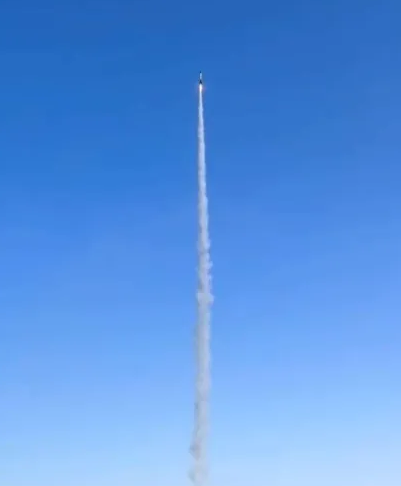
Led the implementation of GPS-based flight tracking systems and developed engineering tools supporting the Phoenix 1 hybrid rocket within the SystemsGo program, including launch monitoring procedures and manufacturing calculations for propulsion components.
Context
The Phoenix 1 program required reliable flight tracking capabilities and accurate manufacturing data to support launch operations and engine production. Existing tracking procedures had not yet been established within the organization.
My Role
Owned the implementation and operation of the vehicle's GPS tracking system while also developing manufacturing support tools used in engine component production.
Key Contributions
• Implemented GPS and altimeter activation procedures for launch operations.
• Operated and monitored rocket tracking systems during launch activities at White Sands Missile Range using TeleMetrum GPS transmitters and a dual-antenna setup.
• Established a GPS activation and monitoring process that became part of the high school's standard launch operations.
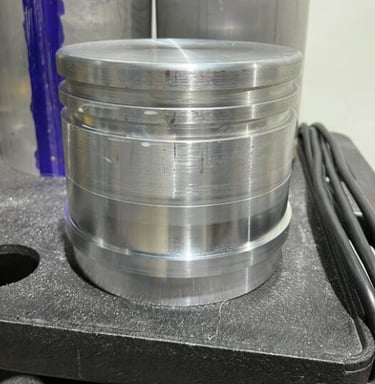
• Designed an Excel-based O-ring seal calculator for determining groove dimensions in a 50k SRAD hybrid rocket engine.
• Applied calculated dimensions to CNC machining operations used in propulsion hardware manufacturing.
• Participated in machining propulsion components including graphite nozzle and aluminum hardware components.
Challenges
The organization lacked a standardized GPS tracking process, requiring development of operational procedures that could reliably support flight monitoring and vehicle recovery efforts.
Result
Successfully implemented a remote altimeter activation technique and developed engineering tools that supported both launch operations and propulsion manufacturing activities.
Skills Demonstrated
Systems implementation, operational planning, GPS tracking systems, Excel modeling, manufacturing support, CNC machining, process development.
Phoenix 1 (SRAD Rocket) - Tracking Systems & Manufacturing
Prometheus Airframe - IREC Competition Rocket
Summary
Participated in manufacturing the fiberglass airframe for Prometheus, a 30,000-foot Spaceport America Cup competition rocket developed by AeroMavs.
Context
The vehicle required a lightweight but durable composite airframe capable of surviving launch loads and supporting payload integration during competition operations.
My Role
Worked as part of the manufacturing team responsible for producing fiberglass airframe components and fins.
Key Contributions
Manufactured fiberglass airframe components using composite layup techniques.
Assisted fabrication of structural fins.
Worked with fiberglass, Mylar, peel ply, and Aeropoxy materials.
Participated in resolving manufacturing and integration challenges during vehicle assembly.
Challenges
Ensuring component compatibility and fitment while maintaining manufacturing quality standards.
Result
The vehicle successfully launched to approximately 22,841 feet AGL and was fully recovered, with the airframe surviving flight operations.
Skills Demonstrated
Composite manufacturing
Aerospace fabrication
Team-based production
Problem solving
Quality control
Recovery System - High Power Rocket
Summary
Designed and validated a dual-deployment recovery system for a K-Class high-power rocket, ensuring successful vehicle recovery following flight operations.
Context
The rocket required a recovery system capable of safely returning the vehicle after reaching its target altitude while minimizing drift and landing risk.
My Role
Served as lead designer of the recovery system.
Key Contributions
Calculated recovery requirements using OpenRocket simulations and hand calculations.
Designed a dual-deployment parachute architecture.
Determined deployment altitudes and recovery sequencing.
Evaluated descent rates and landing considerations.
Integrated recovery planning into overall vehicle design.
Challenges
Recovery systems must balance safe deployment, descent rate, landing footprint, and reliability while operating under changing environmental conditions.
Result
The recovery system successfully deployed and the rocket was recovered after flight operations at Smith Point, Galveston.
Skills Demonstrated
Systems design
Simulation and modeling
Risk management
Technical planning
Aerospace operations